Food Bundle vs Solo Shopping Nigeria: The Face-Off Your Wallet Has Been Waiting For
Every Nigerian shopper knows the weekly dilemma. Do you grab a pre-packed grocery bundle and be done with it, or do you roam the market and aisles picking each item yourself? The food bundle vs solo shopping Nigeria debate is real, and the answer affects not just your purse but your Saturdays, your fuel costs, and the freshness of what ends up on your family's table. We ran the numbers so you don't have to. Below, six honest head-to-head comparisons settle the score once and for all.
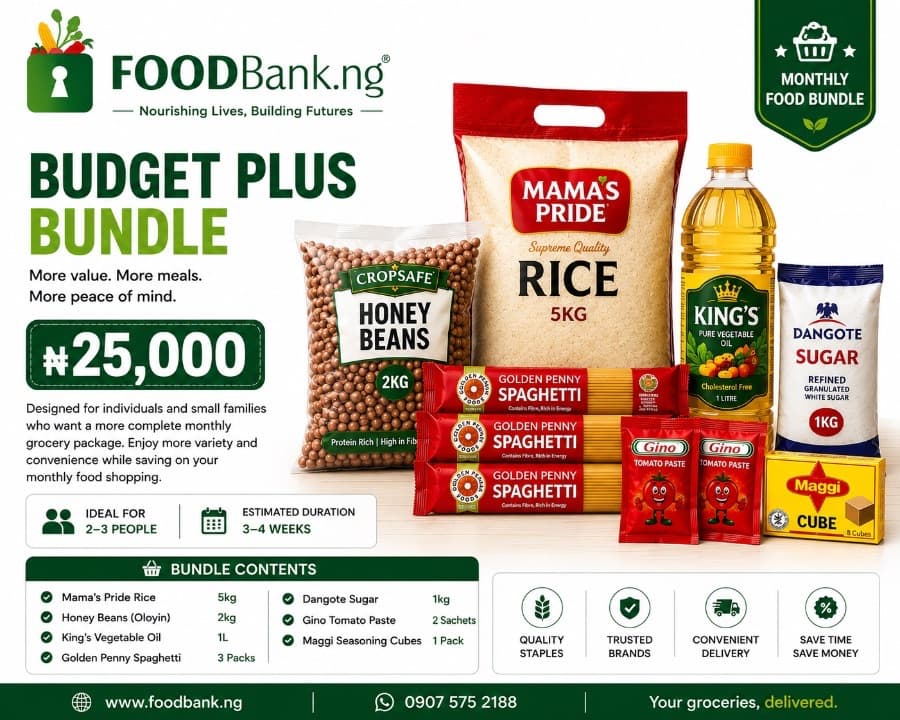
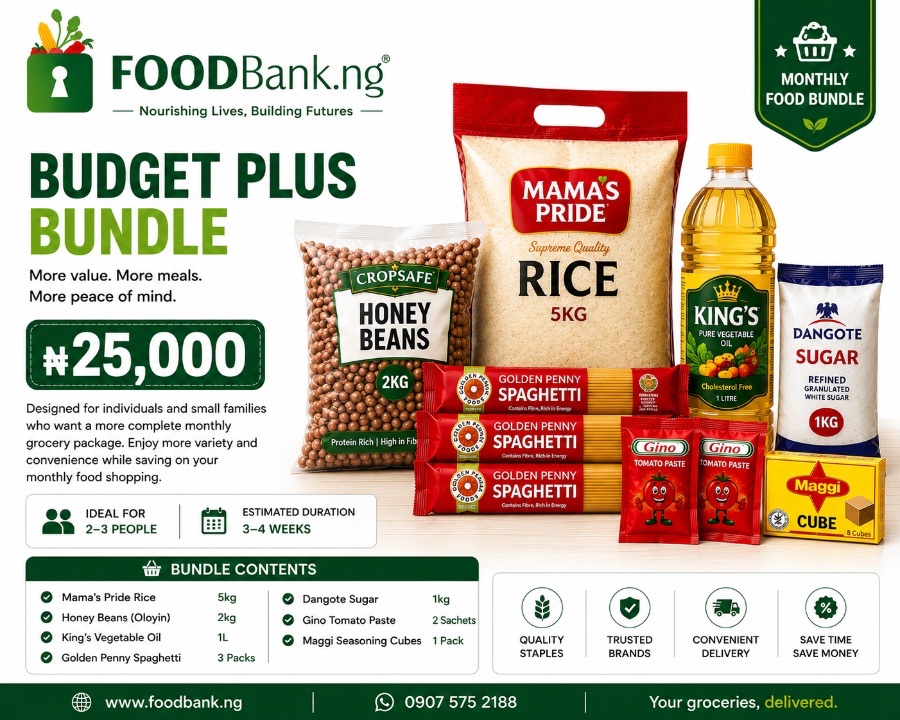
And before the face-offs begin, here is one concrete benchmark to keep in mind: FoodBank.ng's Budget Plus Bundle is fixed at ₦25,000 and contains rice (5 kg), Honey Beans Oloyin (2 kg), Kings Vegetable Oil (1 L), Golden Penny Spaghetti (three 500 g packs), Dangote Sugar (1 kg), Gino Tomato Paste (two 400 g tins), and Maggi Seasoning Cubes (400 g). That's your reference point throughout.
The 6 Head-to-Head Comparisons
Pre-packed Grocery Bundle vs Building Your Own Cart Item by Item
Winner: Pre-packed bundle, Sourcing the exact items in the Budget Plus Bundle individually from a Lagos or Ibadan supermarket typically runs between ₦27,500 and ₦30,000 once you factor in single-unit markups and impulse additions. The fixed ₦25,000 bundle price removes price creep entirely. You know what you are spending before you open your wallet, which makes monthly budgeting far more predictable for Nigerian families living on a fixed income.
Bulk Rice (5 kg bag) vs Small-Unit Rice (1 kg or 2 kg sachets)
Winner: Bulk bag, A 5 kg bag of decent-quality parboiled rice costs roughly ₦5,500 to ₦6,500 in most Nigerian markets today, putting the cost per kilogram at about ₦1,100 to ₦1,300. The same rice sold in 1 kg sachets routinely retails at ₦1,500 to ₦1,800 per kilogram. Over a month, a family of five cooking rice four times a week pays up to ₦3,000 more for the convenience of small packs. Stored in an airtight container away from moisture, a 5 kg bag lasts a family of four roughly three to four weeks with zero spoilage risk.
Canned or Sachet Tomato Paste vs Fresh Tomatoes Bought Weekly
Winner: Tomato paste for convenience; fresh for flavour on a budget., Fresh tomatoes are cheaper per gram when prices are low (as little as ₦500 for a paint bucket during harvest season), but prices swing wildly, sometimes tripling in the dry season. Two 400 g tins of Gino Tomato Paste, as included in the Budget Plus Bundle, cost around ₦2,200 to ₦2,600 combined and have a shelf life of 18 to 24 months unopened. For a working household that cannot guarantee fridge space, the paste wins on reliability and zero waste. Blend it with a handful of fresh pepper when you can afford to, and you get the best of both worlds.
Honey Beans (Oloyin) in Bulk vs Roadside Measured Portions
Winner: Bulk Oloyin beans, A 2 kg bag of Honey Beans Oloyin, like the one in the Budget Plus Bundle, typically costs ₦2,800 to ₦3,200 when bought in that quantity. The same 2 kg purchased in four separate 500 g roadside measures can run ₦3,600 to ₦4,000 because the roadside seller builds their own margin into every small scoop. Beans also store beautifully for three to six months in a sealed container with a few dried bay leaves to deter weevils, making the bulk buy a no-brainer for budget-conscious Nigerian households.
Online Grocery Bundle (with BNPL) vs Physical Market Shopping Trip
Winner: Online bundle with food BNPL Nigeria options, A single market run in Lagos or Ibadan involves transport (at least ₦500 to ₦1,500 return on a bus or okada), one to two hours of travel and bargaining time, and the mental energy of comparing prices across ten stalls. On FoodBank.ng, you can order a curated grocery bundle like the Budget Plus Bundle in under five minutes, pay 50% upfront and spread the remaining balance over two months at 0% interest, and receive delivery without leaving your compound. For civil servants on salary-deduction food credit, the deduction is automatic, making it the most stress-free cheap family grocery option in Nigeria right now.
Spaghetti (Dried, Long Shelf Life) vs Fresh Bread or Yam Bought Daily
Winner: Dried spaghetti for shelf life and cost-per-serving, Three packs of 500 g Golden Penny Spaghetti (as included in the bundle) yield roughly 15 generous servings for two people each, or about 30 child servings. At a bundle-equivalent cost of around ₦2,700 for all three packs, that works out to under ₦200 per serving. Fresh bread bought daily at ₦600 to ₦800 per loaf for a family of five easily tops ₦18,000 a month. Dried pasta stores for up to 24 months, contains zero waste, and takes under 12 minutes to cook, making it one of the highest-value staples in any Nigerian family's pantry. Bulk food buying in Nigeria simply does not get more efficient than this.
So, What Is the Verdict?
Across all six face-offs, the pattern is clear. Buying in planned, curated bulk beats reactive solo shopping on price, time, and stress almost every single time. The only scenario where solo shopping wins is when you need one specific fresh ingredient today and you live next door to the market. Otherwise, the maths, the shelf life, and the peace of mind all point in one direction: shop smarter with a bundle.
The Budget Plus Bundle at ₦25,000 is one of the most straightforward ways to put this lesson into practice. It is already stocked with the staples Nigerian families reach for every week, priced to beat the open market, and available right now on FoodBank.ng. Grab it today and let your budget breathe.
Ready to stop overspending at the market? Sign up on FoodBank.ng to access curated bundles, 0% interest food credit, and Nigeria's most convenient grocery delivery. Already a member? Sign in and add the Budget Plus Bundle to your cart before stocks run out.


